
SaaS Integration
Our state-of-the-art API Integration platform works seamlessly with your current SaaS tools, helping you quickly complete reports for frameworks like the CDP and the Corporate Sustainability Reporting Directive (CSRD).
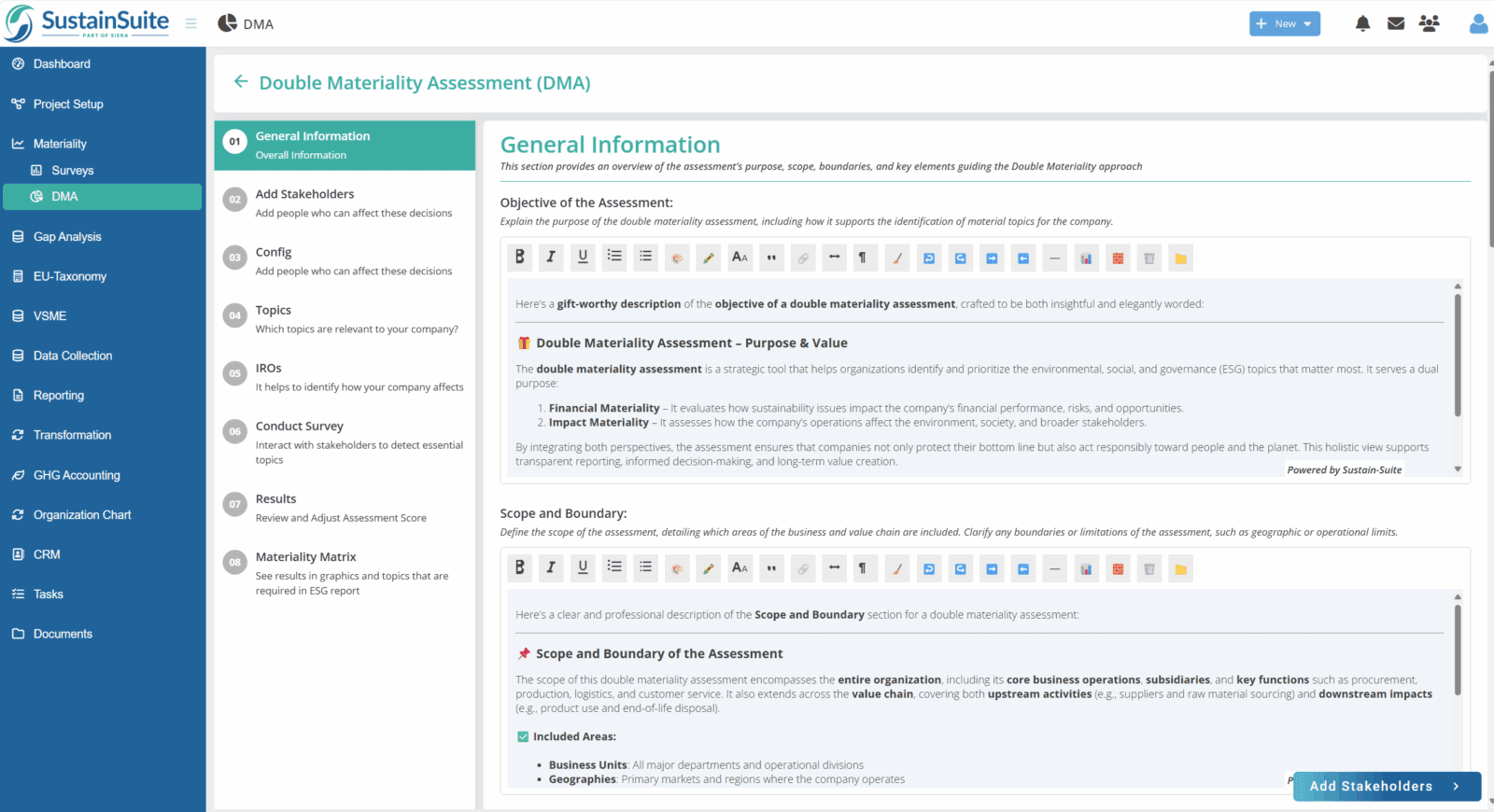
Integrate existing SaaS
Easily Import Your Data for Better ESG Reporting
SIERA Core Impact makes it simple to pull information from your existing systems right into your disclosures. Our state-of-the-art API Integration platform works seamlessly with your current SaaS tools, helping you quickly complete reports for frameworks like the CDP (formerly Carbon Disclosure Project) and the Corporate Sustainability Reporting Directive (CSRD).
Instead of copying and pasting data between systems, you can pull everything directly into our module. Plus, you can save the indicators you use often, so future reports are even faster to prepare.
Contact our Team to learn more about the connectivity of SIERA Core Impact to your company software environment.
SIERA Core Impact API Architecture
Single Endpoint API Architecture
Learn more about your API options:
- Simplified Client Development - With only one endpoint to interact with, client developers don't need to manage multiple routes and endpoints. This can simplify the implementation and maintenance of client applications.
- Flexible Querying - Similar to GraphQL, a single endpoint allows for flexible queries where the client can specify exactly what data they need. This can reduce over-fetching and under-fetching of data.
- Easier Versioning - When changes to the API structure are needed, only one endpoint needs to be updated, rather than modifying multiple routes.
- Centralized Logic - Security, authentication, and other cross-cutting concerns can be implemented at a single point, potentially simplifying the overall architecture.
Frequently Asked Questions (FAQs)
Below are some frequently asked questions to help you better understand how SIERA Core Impact integrates with your existing systems and simplifies your sustainability reporting.
Q1: Why is implementation more complex with a single-endpoint architecture?
Because the logic to handle all possible requests at one endpoint can be complex and harder to maintain compared to using multiple separate routes.
Q2: Can using a single endpoint cause performance issue?
Yes, very complex or large queries routed through a single endpoint may lead to performance bottlenecks if not carefully optimized.
Q3: Why is caching more difficult with a single-endpoint API?
Caching responses is harder because unlike REST APIs with clearly defined resource endpoints, a single-endpoint approach makes it challenging to determine what should be cached and reused.
Q4: How does a single-endpoint architecture deviate from REST standards?
It doesn’t follow traditional REST conventions, which may reduce interoperability and make it less intuitive for other developers used to common REST patterns.
Conclusion
A single-endpoint API can offer advantages in certain scenarios, particularly for internal or specific use cases. However, for public or widely-used APIs, standard-compliant REST architectures or GraphQL are often preferred due to their better documentation, understanding, and support.
The decision to use a single-endpoint architecture should be carefully considered, taking into account the specific requirements of the project, the development team, and long-term maintainability.